Judgment and decisions
A good decision can end badly
Review a choice without letting the outcome rewrite what you knew beforehand.
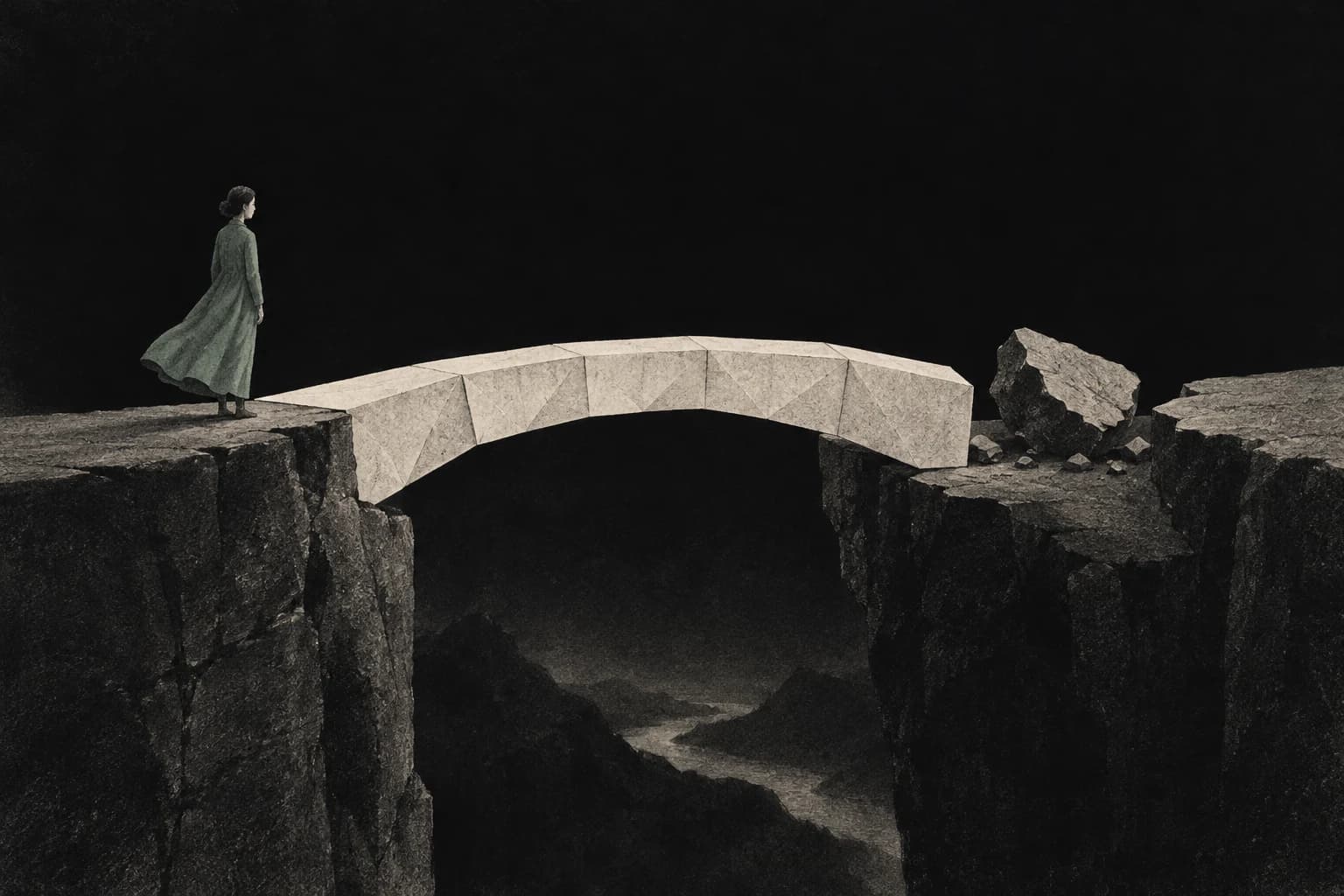
Someone chooses a supplier after comparing proposals, checking previous deliveries and speaking with clients. An unexpected problem disrupts the supplier, and the work is late. Was the choice bad?
The delay matters and needs attention. Assessing the decision also requires knowing what could have been known when it was made. Judging only by outcomes can condemn careful analysis or encourage repeating a weak choice that got lucky.
This distinction needs care. Saying "the outcome was uncertain" does not end the review. Some uncertainties could have been investigated; others were known and accepted for a reason. Examine the process without erasing its consequences.
Reconstruct the available information
In a fictional example, two suppliers could deliver the work. One had a lower price and little experience with this type of task. The other cost more and supplied relevant references. The team chose the second, whose essential equipment was later damaged.
Begin the review with information available before the contract. Did the team check that equipment dependency? Was there a replacement plan? Did the deadline leave any buffer? Did the references concern the same task?
The incident may reveal an omission in the analysis. It may also be an event the team considered possible and accepted because alternatives had other costs. These situations call for different lessons.
Consulting the original record prevents attributing later information to the team at the time of choice. If no record exists, find proposals and messages written beforehand and recognize that reconstruction will be incomplete.
Assess the alternatives that existed
After a problem, a rejected alternative looks more attractive. It no longer has to face its own difficulties; it only needs to look better than the observed outcome.
Compare options using what was known then. The cheaper supplier could also have been late or delivered unsuitable work. If its capability had not been demonstrated, treating it now as a guaranteed solution changes the comparison.
You can still use new information. Discovering that the supplier had capability the team never checked suggests an improvement in selection. Distinguish that discovery from imagined certainty that everything would have worked.
Include waiting or reducing scope if those were feasible. The review might show that the error was accepting a deadline none of the proposals could support.
Examine the risk that was accepted
A thoroughly analyzed choice can still be unsuitable for those who bear its consequences. Knowing the probability of delay is insufficient; consider what the delay causes.
If a small failure halts an essential operation, another way to perform the task may be needed. If postponement has little impact, paying for redundancy may not be worthwhile. The same uncertainty leads to different decisions according to exposure to harm.
Ask who participated in that assessment. The purchasing team may accept a condition another area must face. Making the cost visible beforehand improves comparison and communication.
Use the outcome as information
An outcome helps test hypotheses. If delivery required much more supervision than planned, revise the effort estimate. If a contractual guarantee was unhelpful during failure, examine what it actually protected.
A single incident can have competing explanations. The problem may concern that supplier, that type of service or an exceptional condition. Repeated patterns and differences between cases help establish the lesson's scope.
Avoid turning each incident into a universal rule. "Never hire companies this size" may go far beyond the evidence. "Check replacement equipment capacity for this service" better addresses the observed failure.
Make the review change the work
A review can record four things: what you expected, what happened, which differences matter and what you will do next time. Keep facts and interpretations in separate fields.
The change might be checking replacement resources before committing to a deadline. If an impossible expectation was the main problem, it might be negotiating the deadline before selecting a supplier.
Assign the change too. "We need to pay more attention" leaves no owner or situation for action. Adding a question to proposal comparisons, with someone responsible for answering it, makes learning verifiable.
Use the decision journal to preserve earlier reasoning and add a review afterward. Comparing them helps identify what to repeat and what to change. Use the review to decide how to address the problem and improve the next choice.
Comments
What experience or different perspective would you add to this conversation?
Comments are reviewed before publication. Disagreement is welcome; be respectful and avoid confidential information or other people’s personal data.
Loading comments…
Add your perspective