Thinking and knowledge
Feedback loops: reinforcing and balancing examples
Two support diagrams to understand the return between cause and effect and test an intervention.

A feedback loop occurs when the effect of a change returns to influence the process that produced it. In support, replies that leave questions unresolved may generate new contacts and increase the queue already putting pressure on the team.
In this fictional example, the growing queue may also prompt a balancing response. The relationships in the diagrams need checking; the drawing does not measure their strength or prove they are causing the problem.
Check whether the relationship really closes a loop
Each relationship needs investigation. Replies might have deteriorated because of a product change, while the queue grew because of a campaign. Observing two things at the same time does not establish that one caused the other.
Talk to support staff and compare records of repeat contacts. Mark which relationships have support and which remain hypotheses. A drawing with arrows can organize questions even when we still know little about their answers.
Distinguish reinforcement from balance
A reinforcing loop amplifies a change. In the example, the difficulty may worsen through its own consequences. A balancing loop acts to contain a change, such as a rule limiting new intake when the queue exceeds agreed capacity.
These names describe how the relationship works. Reinforcement may favor a desired or unwanted outcome. Balance may protect support or maintain a situation that needs changing. Avoid treating the names as quality judgments.
Donella Meadows explains reinforcing and corrective loops in her essay on leverage points.
Two diagrams for following the return
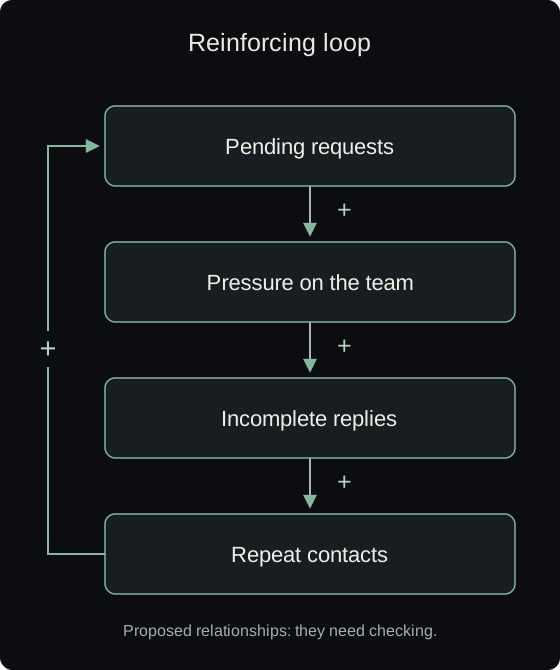
In this reinforcing loop, each increase favors another increase. The + sign means the variables tend to move in the same direction, other conditions held constant. The same structure can also reinforce a decrease. The sign does not mean the outcome is desirable.
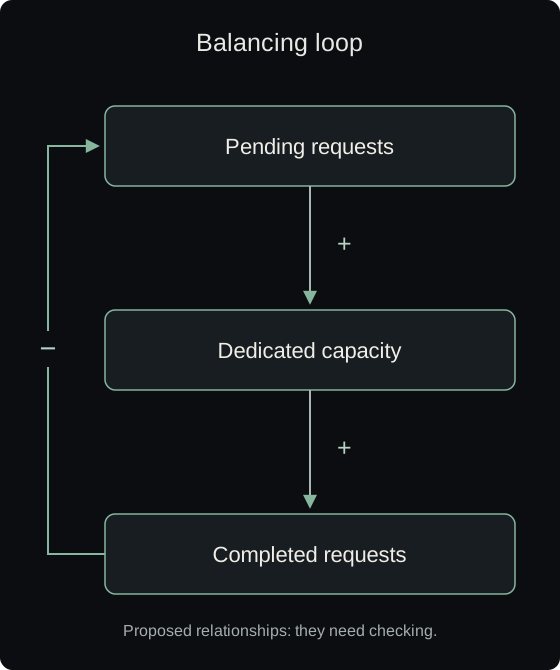
In the second drawing, the team responds to the queue by dedicating additional capacity. More capacity increases completions; more completions reduce pending requests. That last relationship receives − because the variables move in opposite directions. The returning relationship opposes the increase that triggered the response.
Correction depends on capacity that can be reassigned in time. If the same people are already committed to another essential service, the drawing needs to show that cost. Delays in activating the response may also allow the queue to grow before action takes effect.
Look for the interval between action and effect
Suppose the team improves the instructions in a frequently used reply. Customers already served may keep returning for a while, while new ones receive the corrected version. The queue's total may take time to show the difference.
Separate new contacts, returns and subjects to observe the change. Looking only at the total might lead you to abandon a useful intervention early or credit it for an improvement caused by fewer incoming requests.
Agree when to review the trial and which signs may appear before the final outcome. The time frame should reflect how the process works. Waiting indefinitely also costs something and can prolong an ineffective intervention.
A trial that could contradict the drawing
Choose a subject where customers return because instructions were incomplete. Define in advance how to identify a return for the same reason and what observation period fits product use. Compare the revised reply with the previous process, noting changes in request volume and type.
| Observation | What it helps investigate | What it still does not establish |
|---|---|---|
| Returns for the same reason among tracked cases | Whether the revised reply may reduce repetition | That every repeat contact was caused by the earlier reply |
| Support time per case | The effort required by the change | The final effect on the whole team's capacity |
| New intake and completed requests | How the queue changes during the trial | That the intervention was the only cause of change |
In the experiment worksheet, write an alternative explanation, such as a product fix occurring in the same period. If returns fall only for subjects affected by that fix, improving the reply may have contributed less than it appeared.
The trial may justify keeping the new instructions while leaving uncertainty about the whole loop. Record which relationship gained support and which remains unchecked. The next investigation can then start with the unknown part of the process.
A change may create another cost. Allowing more time per reply might reduce returns and reduce the number handled at first contact. Assess both effects, including work shifted to other people or channels.
The reading on stocks and flows helps distinguish the accumulated quantity from the inflows and outflows that change it. To change the queue, you need to understand how the intervention affects those movements.
Preserve the map's limits
A team may participate in several loops at once. Product changes, sales promises and hiring criteria may influence support. Start with a boundary useful to the question and expand it when an important relationship passes outside it.
Also look for cases in which pressure occurred without poorer replies. There may have been better instructions, specific experience or a different division of work. Comparing those cases with ones producing returns may reveal a condition missing from the map.
Comments
What experience or different perspective would you add to this conversation?
Comments are reviewed before publication. Disagreement is welcome; be respectful and avoid confidential information or other people’s personal data.
Loading comments…
Add your perspective